


Chicago’s Forgotten War Memorials: History on the Corner of Your Street
Where to Find War Memorials in Chicago
Chicago is known for its skyline, its architecture, and its grand monuments in places like Grant Park. But some of the city’s most powerful war memorials aren’t towering statues or lakefront landmarks. They’re standing quietly on neighborhood street corners.
After World War II, dozens of small memorials were erected across Chicago by local residents, civic clubs, churches, and small businesses. These weren’t massive civic projects. They were personal. Local. Immediate. Often, they were simple:
A metal pole.
A small plaque.
A name.
Each one honoring a young man — sometimes more than one — from that very neighborhood who never came home.
Lincoln Park: Two Memorials That Remain
At Fullerton and Cleveland stands one of the few surviving examples. It honors George Estes, a Seaman Second Class in the U.S. Navy who was killed in action in the South Pacific in October 1944 and buried at sea. He had lived just blocks away at 2046 North Orleans.
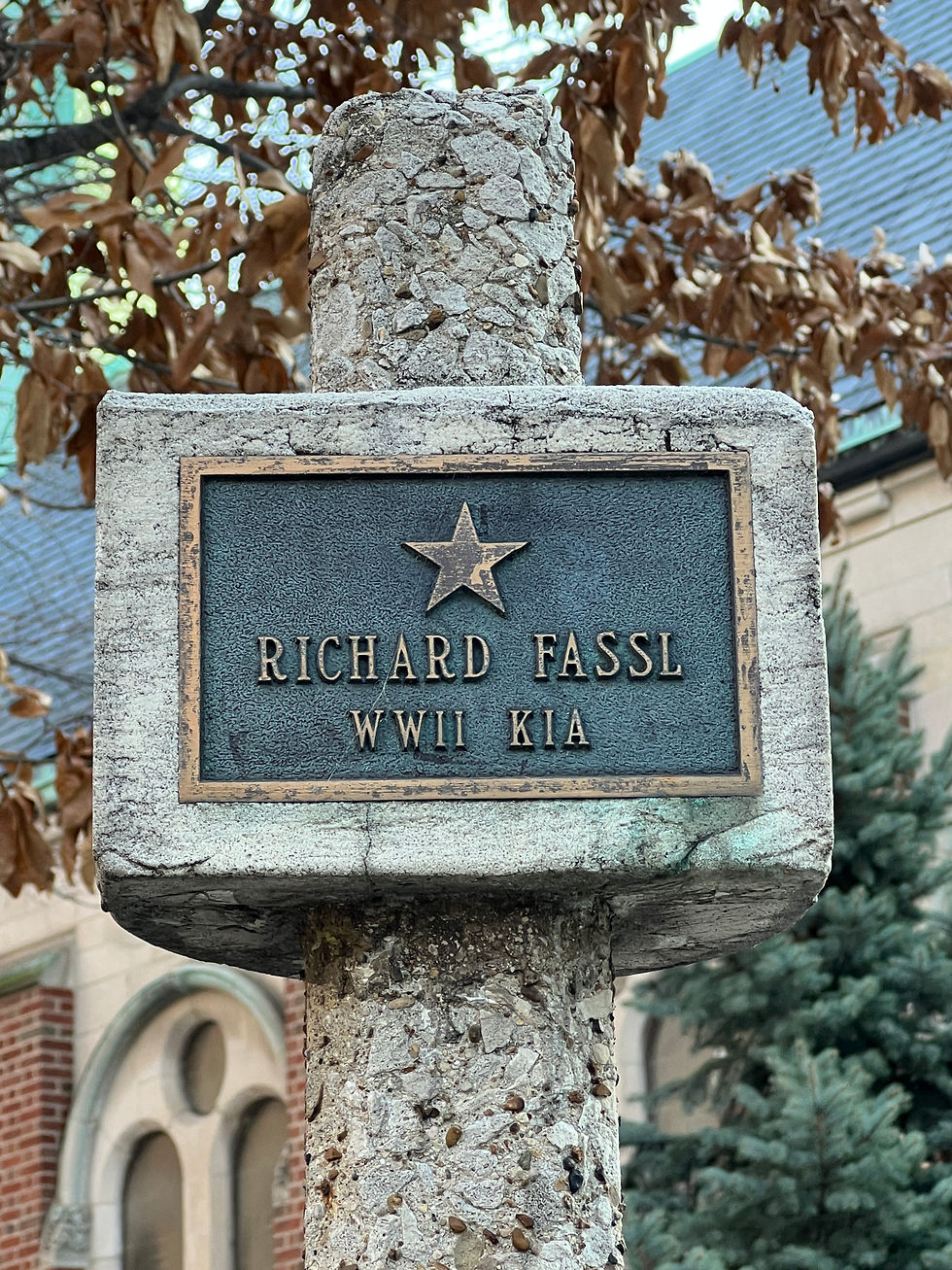
Two blocks west, at Fullerton and Orchard, another memorial honors Richard Fassl, a Lincoln Park resident and bombardier who was killed in action over England.
Today, both memorials are maintained by the Mid-North Neighborhood Association — a reminder that remembrance, like history, requires stewardship.
A Citywide Movement of Remembrance
These types of neighborhood memorials were once common throughout Chicago.
Some were individual plaques mounted on poles at intersections. Others were larger “Honor Rolls” listing every man and woman from the neighborhood serving in the war. During the 1940s, many were decorated with flagpoles and the letter “V” for victory.
They were hyperlocal memorials — deeply tied to place. You didn’t have to travel downtown to remember someone. You simply walked to the corner.
Chicago also built grander civic monuments. In Oak Woods Cemetery and Rosehill Cemetery, Civil War monuments had already established a tradition of honoring the fallen in stone and bronze. The imposing equestrian statue of General John A. Logan still stands in Grant Park, representing an earlier era of commemoration. But the post-and-plaque memorials of World War II were different. They were woven into daily life.
Why So Many Have Disappeared
Today, these neighborhood memorials are rare. Over time, plaques deteriorated and fell off. Poles were damaged or removed. As streets were widened and developments rose, many were taken down. In some parts of the city, you might find an empty pole — the plaque long gone. What was once a common sight across Chicago has become difficult to find.
Yet a handful survive.
The Importance of Looking Up
War memorials aren’t always grand columns or monumental fountains. Sometimes they are quiet markers placed where someone once walked to school, caught a streetcar, or played on the sidewalk. They connect national history to neighborhood memory.
Next time you’re walking through Chicago — whether in Lincoln Park, Bridgeport, or elsewhere — look a little closer at the corners. You might be standing beside a memorial.
And you might not even know it.
Watch the Full WWII Memorials Story on YouTube Here
War Memorials in Lincoln Park
Fullerton & Cleveland
Fullerton & Orchard
Chicago, IL 60614
Discover More Hidden Gems
For more hidden gems check out my book Chicago Beyond the Bean, available now.
It’s filled with stories that take you beyond the typical tourist spots to explore the city’s most fascinating corners. Learn more about Chicago Beyond the Bean →

Comments